

Thousands of Apps, No Shared Standard: How Digital Mental Health Earns Its Way Into Care

APA Labs Digital Badge Solutions Library Reaches 10 Organizations with Latest Additions

Abstract Demand is growing for safe, effective AI systems and digital mental health tools as users increasingly turn to them for support. In this News and Perspectives article, JMIR Correspondent Simon Spichak reports on a new initiative by the American Psychological Association, speaking with Managing Director Tanya Carlson about how the Digital Badge Program is helping developers improve their tools. Key Takeaways: The American Psychological Association (APA) developed the APA Labs Digital Badge Program to help developers improve their mental health apps. When the program presents companies with gaps related to security, usability, or other factors, they work to shore up their product to earn a bronze, silver, or gold badge. The APA is hoping the program will set a de facto standard for developers. Simon Spichak is the cofounder of Resolvve, a low-cost virtual therapy clinic. He has no financial or commercial relationship with APA Labs. Many around the world are turning to AI-powered chatbots for mental health support. These tools aren’t necessarily designed to be safe and effective clinicians and may leak sensitive information to third parties . The American Psychological Association (APA) is hoping to pave the way for safe, evidence-based mental health tech with the rollout of the APA Labs Digital Badge Program and the Digital Badge Solutions Library of apps that have gone through the program. While some libraries, like MindApps.org , provide prospective users with safety and privacy information, and MindBench.ai provides an independent audit of AI systems, the Digital Badge Program also allows companies to earn certification and shore up the quality of their apps. Based on the evaluation, which assesses criteria such as regulation and safety, data protection and privacy, and usability and accessibility, APA Labs provides a bronze, silver, or gold badge. JMIR Publications spoke with Tanya Carlson, MBA—managing director of APA Labs—about the program, how it works, and whether it’s improving the quality of digital mental health apps. The interview was edited for concision and clarity. How would you describe the Digital Badge Program and the Digital Badge Solutions Library? ... Continue reading the full article on JMIR Publications

Few challenges in healthcare are discussed more often than access. Across the U.S., demand for mental health support continues to outpace the available workforce, leaving many individuals waiting weeks for appointments or unable to access care altogether. As organizations, clinicians, and communities search for new ways to close this gap, digital technologies and artificial intelligence are increasingly being explored as tools to expand access, improve efficiency, and support clinicians in meeting growing demand. This was a topic explored by Dr. Vaile Wright, Senior Director of the Office of Health Care Innovation at the American Psychological Association, during her CES conversation, Unlocking the Power of AI to Transform Mental Health Care. The discussion examined how AI and digital technologies may help expand access to support while highlighting the importance of psychological science in ensuring these solutions are ethical, evidence-based, and effective. As AI becomes a larger part of the behavioral health landscape, another conversation is gaining momentum: how organizations evaluate whether these technologies are supported by the evidence needed to responsibly integrate them into care. Watch the full Q&A located under the CES session to learn more about the opportunities and challenges shaping the future of mental health innovation. Expanding Access Responsibly The future of digital mental and behavioral health won’t be defined by access alone. It will be shaped by whether technologies can demonstrate that they are effective, trustworthy, and appropriate for the populations they are designed to serve and supported by credible evidence. For founders, that means thinking beyond innovation and considering how evidence, evaluation, and trust are built into the product development lifecycle. For clinicians, it means helping shape how emerging technologies are developed, evaluated, and implemented. For health systems and employers, it means understanding what questions should be asked before adoption decisions are made. As expectations around transparency, accountability, and responsible innovation continue to grow, evidence is increasingly becoming a differentiator rather than a nice-to-have. Why Psychological Science Matters Digital mental and behavioral health is different from many other technology categories because products are built specifically to influence emotional experiences, behavioral choices, mental health support, and personal well-being. That means organizations need confidence that these technologies are not only engaging and accessible but also grounded in sound psychological science. Evidence gives clinicians, healthcare systems, payers, employers, and patients greater confidence that a technology has been thoughtfully designed, evaluated, and informed by established psychological principles. It also helps organizations understand where technology performs well, where limitations exist, and how it should be implemented responsibly. As innovation continues to accelerate, psychologists and researchers emphasize the importance of rigorous evaluation, stronger evidence standards, and thoughtful oversight to help ensure these technologies are ready for broader adoption. Innovation Without Evidence Creates Risk As innovation accelerates, the conversation is shifting to how organizations should evaluate the technologies entering healthcare settings. The digital mental health market is growing rapidly with new platforms, chatbots, coaching tools, and AI-powered experiences entering the market every year. These questions reflect a broader shift across the industry on evidence, transparency, and responsible implementation: What evidence supports this technology? How has it been evaluated? Is it appropriate for the people it serves? What safeguards are in place? How should results be interpreted? What role should human oversight play? Separating Promise from Proof As organizations evaluate digital mental health technologies, the conversation is increasingly shifting to how organizations can identify technologies that deserve trust. The APA Labs Digital Badge Program was created to help support those conversations by providing an independent evaluation process designed to help organizations better understand the evidence, safeguards, and considerations reflected within digital mental health technologies. For organizations exploring the future of digital mental health, the challenge is no longer simply identifying innovative technologies. It is understanding which technologies have taken meaningful steps to demonstrate trustworthiness, transparency, and a commitment to responsible innovation.
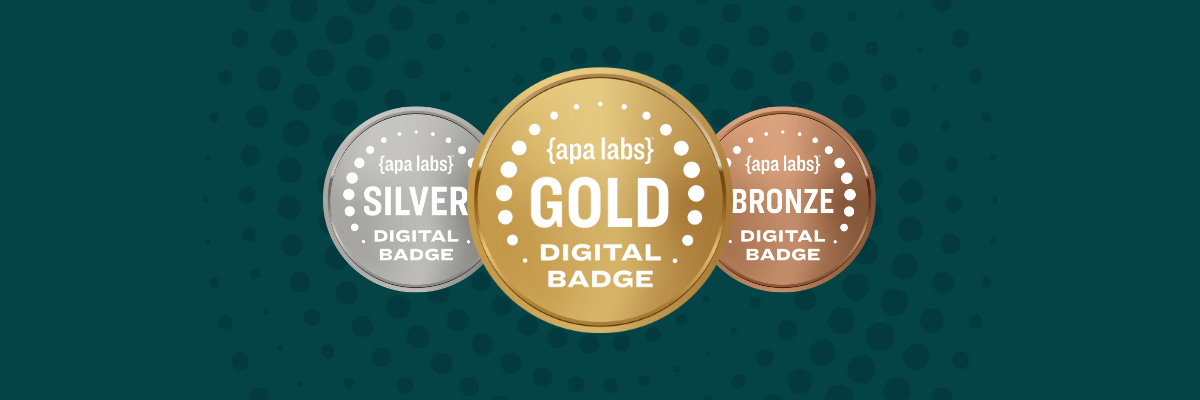
APA Labs’ Digital Badge Solutions Library supports clinicians, health systems, and users in search of these tools
Written in partnership between GIMBHI & APA Labs

Synthetic relationships are no longer experimental. AI-enabled companion tools, emotional support chatbots, and conversational agents are increasingly positioned as substitutes for social connection. For many users, these tools are filling a very real void — addressing the fundamental human need for connection, affirmation, and belonging. But as adoption grows, so do the risks. A recent APA Monitor article by Dr. Efua Andoh flags what the research is beginning to show: excessive reliance on AI companion tools may worsen loneliness over time and erode real-world social skills. When users form emotional bonds with nonhuman systems, the line between support and substitution becomes blurred. For founders and teams developing AI in digital mental and behavioral health, these risks are not theoretical. They are product realities. Emotional Simulation in AI Mental Health Tools Is Not Neutral Relational AI and companion chatbots interact directly with attachment systems, identity formation, vulnerability, and emotional regulation. When a digital mental health app simulates empathy, affection, or companionship, it produces measurable psychological impact — whether intended or not. Founders and product leaders developing AI mental health tool must ask: What is the long-term behavioral effect of repeated interaction? Are we supplementing connection or replacing it? What guardrails exist for vulnerable users? How are minors protected? What happens when a user expresses suicidal ideation? These are not edge cases in digital mental health innovation. They are foreseeable design obligations. At APA Labs , we view responsible digital mental and behavioral health innovation as a shared responsibility between developers, clinicians, researchers, and regulatory leaders. Chatbot Regulation Is Accelerating Regulation of Mental health chatbots and companion AI is no longer speculative. States are beginning to respond. In November 2025, New York passed a law requiring chatbots to remind users every three hours that they are not human. In California, Governor Gavin Newsom signed the Companion Chatbots Act (S.B. 243), mandating similar nonhuman disclosures, prohibiting exposure of minors to sexual content, and requiring crisis-response protocols for users expressing suicidal ideation. These policies signal an emerging expectation: AI mental health tools must incorporate transparency, user safety protection, and regulatory foresight. For founders, this means product decisions must anticipate compliance expectations before enforcement becomes reactive. Designing AI in Behavioral Health for Responsibility The next phase of digital mental health innovation will be defined not by conversational realism alone, but by safety, evidence, and oversight. Responsible AI mental health development requires: Clear disclosures that distinguish human and nonhuman interaction Evidence-informed product design Independent evaluation pathways Crisis response and escalation protocols Ongoing assessment of user impact Independent evaluation of digital mental health apps and AI-enabled behavioral health platforms is becoming central to long-term credibility. At APA Labs , we work at the intersection of psychology, technology, and evaluation to strengthen the mental and behavioral health ecosystem. That includes supporting mental health app evaluation , advisory services , and expert matching to help teams build responsibly. Responsible innovation in this space requires psychological expertise embedded early — not added later in response to public scrutiny. Responsibility as Competitive Advantage Relational AI and companion chatbots may help address loneliness, and barriers to care. However, innovation without oversight risks eroding trust – and inviting regulatory intervention. In digital mental and behavioral health, trust is not optional. User safety in mental health technology is becoming a defining market differentiator. Founders and teams who embed psychological expertise and independent evaluation into their development lifecycle will be better positioned to scale sustainably. The standards guiding AI mental health tools are being defined now by regulators, researchers, and industry leaders. Digital mental health founders who prioritize responsible innovation will not only reduce risk. They will shape the future of behavioral health technology.

Adapted from the congressional testimony of Dr. Mitch Prinstein, Chief Science Officer, American Psychological Association (APA)

From Fortune: In a market projected to reach $33 billion by 2030, APA Labs aims to close the standards gap with its evidence-based Digital Badge Program. In the shifting landscape of digital health, one fact is impossible to ignore: The market for mental and behavioral health technology is booming. However, the speed of innovation has outpaced the development of consistent standards for evaluating safety, usability, and scientific principles—creating uncertainty among consumers, providers, and investors alike. That’s why American Psychological Association Services, Inc. (APASI) created APA Labs. APA Labs was launched to accelerate innovation at the intersection of psychology and technology. Its mission is to support evidence-based, ethical, and scalable innovation in digital mental and behavioral health technology. A missing signal in a noisy market Millions of dollars flow into apps, platforms, AI-driven solutions, and services that claim to solve a variety of challenges across mental and behavioral health. Yet for many users, clinicians, health systems, payers, and investors, an important question persists: Which tools genuinely deliver measurable impact and which are driven by market hype? With the digital mental and behavioral health market expected to exceed $33 billion by 2030, the lack of standardized criteria or benchmarks has made it difficult to determine which technologies are reliable and safe. That’s the gap APA Labs is actively addressing and filling. Fostering market trust with the APA Labs Digital Badge Program Recognizing the need for greater clarity and trust in digital mental and behavioral health technologies, APA Labs created the Digital Badge Program to help clinicians, health systems, and users navigate the crowded marketplace. The APA Labs Digital Badge Program evaluates technology across six essential domains, awarding badges that align with proprietary criteria in the following areas: Scene setters: clarity about the product’s intended purpose and audience Scientific principles: rigorous support for any clinical or behavioral outcomes claimed Regulation and safety: compliance with relevant laws and inclusion of appropriate safety protocols Data protection and privacy: responsible data practices and user rights Technical security and stability: encryption, reliability, and robust software integrity Usability and accessibility: adherence to accessibility standards and clinical design best practices “With so many digital mental and behavioral health technologies on the market, it’s difficult for consumers, clinicians, and health care providers to know which ones they can trust,” explained Tanya Carlson, managing director of APA Labs. “At the same time, responsible developers want to build impactful products but often lack clear guidance on best practices to create safe, ethical, and science-based solutions. The APA Labs Digital Badge will provide an evidence-based evaluation that helps the public make informed choices, gives clinicians confidence in what they recommend, and supports developers who are committed to ethical, trustworthy products.” ... Continue reading the full article on Fortune