

Thousands of Apps, No Shared Standard: How Digital Mental Health Earns Its Way Into Care

APA Labs Digital Badge Solutions Library Reaches 10 Organizations with Latest Additions
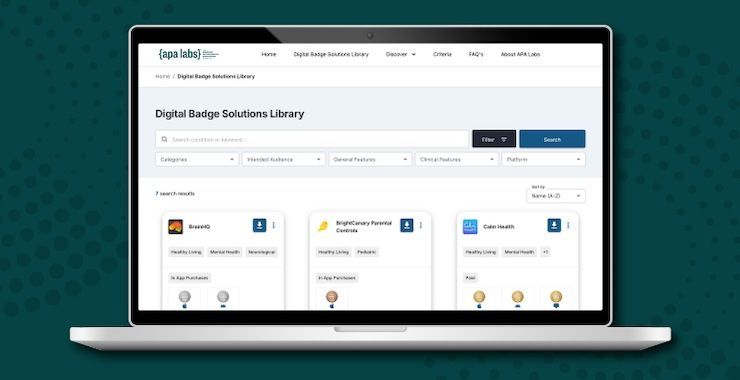
Abstract Demand is growing for safe, effective AI systems and digital mental health tools as users increasingly turn to them for support. In this News and Perspectives article, JMIR Correspondent Simon Spichak reports on a new initiative by the American Psychological Association, speaking with Managing Director Tanya Carlson about how the Digital Badge Program is helping developers improve their tools. Key Takeaways: The American Psychological Association (APA) developed the APA Labs Digital Badge Program to help developers improve their mental health apps. When the program presents companies with gaps related to security, usability, or other factors, they work to shore up their product to earn a bronze, silver, or gold badge. The APA is hoping the program will set a de facto standard for developers. Simon Spichak is the cofounder of Resolvve, a low-cost virtual therapy clinic. He has no financial or commercial relationship with APA Labs. Many around the world are turning to AI-powered chatbots for mental health support. These tools aren’t necessarily designed to be safe and effective clinicians and may leak sensitive information to third parties . The American Psychological Association (APA) is hoping to pave the way for safe, evidence-based mental health tech with the rollout of the APA Labs Digital Badge Program and the Digital Badge Solutions Library of apps that have gone through the program. While some libraries, like MindApps.org , provide prospective users with safety and privacy information, and MindBench.ai provides an independent audit of AI systems, the Digital Badge Program also allows companies to earn certification and shore up the quality of their apps. Based on the evaluation, which assesses criteria such as regulation and safety, data protection and privacy, and usability and accessibility, APA Labs provides a bronze, silver, or gold badge. JMIR Publications spoke with Tanya Carlson, MBA—managing director of APA Labs—about the program, how it works, and whether it’s improving the quality of digital mental health apps. The interview was edited for concision and clarity. How would you describe the Digital Badge Program and the Digital Badge Solutions Library? ... Continue reading the full article on JMIR Publications